Acrylic Adhesives

2K mixed & no-mix systems

Acrylic Adhesives

Structural acrylic adhesives, often based on methyl methacrylate (MMA) chemistry, are the go-to solution when you need extreme strength without the slow cure times and meticulous surface preparation that epoxies demand. Available as two-component mixed systems, surface-activated no-mix systems, and one-component light-cure formulations, these rapid-curing adhesives are engineered to deliver exceptional shear, peel, and impact resistance across a wide range of assembly processes.

They excel at chemically fusing difficult-to-bond substrates, including low surface energy (LSE) plastics, composites, and bare metals that still retain residual cutting oils. By replacing mechanical fasteners and welding, structural acrylics streamline manufacturing, reduce assembly weight, and eliminate the localized stress concentrations that rivets and spot welds create.

107 products

  • SIKAFLEX 232US

    SIKAFLEX 232US

    • High-Green-Strength Assembly Bonding
    • Non-Sag Gap-Filling Application
    • One-Part Moisture-Cure Processing
  • ARALDITE 2021-1

    ARALDITE 2021-1

    • Rapid 9-Minute Strength Development
    • Broad Multi-Material Bonding
    • 27 MPa Aluminum Lap Shear
  • PERMABOND MT382

    PERMABOND MT382

    • Self-Leveling Electronic Potting
    • Extended 20-50 Minute Pot Life
    • High-Elongation Modified Epoxy
  • ITW PLEXUS MA422

    ITW PLEXUS MA422

    • 10:1 Controlled Mixing
    • 17 to 20-Minute Working Window
    • 0.75 to 9.5 mm Gap Range
  • ITW PLEXUS MA832

    ITW PLEXUS MA832

    • 10:1 Controlled Mixing
    • 12 to 14-Minute Working Window
    • Glass-Bead Bondline Control
  • PERMABOND TA4810

    PERMABOND TA4810

    • As-Received Metal Bonding
    • Non-Sag 2 mm Gap Filling
    • Fast Working-Strength Development
  • PLEXUS AO420

    PLEXUS AO420

    • Controlled 4-6 Minute Assembly
    • Broad 0.75-9.5 mm Gap Range
    • Balanced Strength and Elongation
  • PLEXUS MA1020

    PLEXUS MA1020

    • Very Low Cure Shrinkage
    • Fast 15-20 Minute Strength Build
    • Broad 0.75-9.5 mm Gap Range
  • PLEXUS MA2045

    PLEXUS MA2045

    • Extended 45-50 Minute Work Window
    • Vertical Non-Sag Placement
    • Deep 38 mm Gap Bonding
  • PLEXUS MA300/3000

    PLEXUS MA300/3000

    • Simple 1:1 Meter-Mix Processing
    • Fast 3-6 Minute Assembly
    • High-Strength Stiff Cured Bond
  • PLEXUS MA420FS

    PLEXUS MA420FS

    • Rapid 1-2 Minute Work Window
    • Controlled 1-4 mm Gap Range
    • Robotic Plastic Assembly Fit
  • PLEXUS MA420W

    PLEXUS MA420W

    • Fast 3-4 Minute Assembly
    • Rapid 13.5-Minute Strength Build
    • Wide 0.25-9.5 mm Gap Range
  • PLEXUS MA425

    PLEXUS MA425

    • 30-35 Minute Working Time
    • Non-Sag Thixotropic Dispensing
    • 30-50% Typical Elongation
  • PLEXUS MA440

    PLEXUS MA440

    • Self-Leveling Two-Part System
    • 15 MPa Typical Tensile Strength
    • 121 deg C Air Service Limit
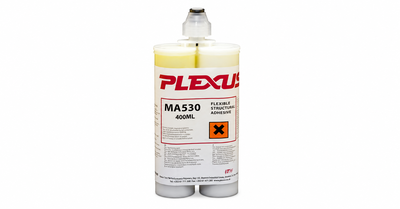
  • PLEXUS MA530

    PLEXUS MA530

    • 30-40 Minute Working Time
    • Up to 18 mm Gap Tolerance
    • 90-160% Typical Elongation
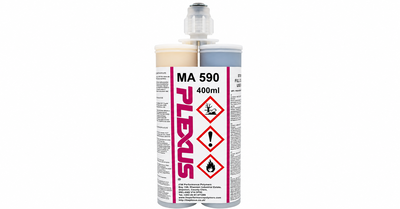
  • PLEXUS MA590

    PLEXUS MA590

    • 90-105 Minute Working Time
    • Up to 38.1 mm Gap Fill
    • >130% Typical Elongation
  • PLEXUS MA8105

    PLEXUS MA8105

    • Primerless Multi-Material Bonding
    • Easy 1:1 Mixing
    • Low-Odor Non-Filled Formulation
  • PLEXUS MA8120

    PLEXUS MA8120

    • Low-Halogen Primerless System
    • Broad Coated-Metal Adhesion
    • Salt-Spray Environmental Resistance
  • PLEXUS MA830

    PLEXUS MA830

    • 4-6 Minute Working Time
    • Fast Primerless Metal Assembly
    • 2,610-3,190 psi Tensile Strength
  • PLEXUS MA920

    PLEXUS MA920

    • Fast 4-6 Minute Working Window
    • Low-Odor Structural Bonding
    • Balanced Strength and Elongation
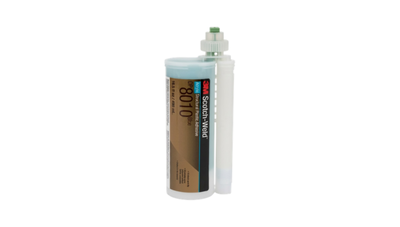
  • 3M™ Scotch-Weld™ Low Odor Acrylic Adhesive DP8010

    3M™ Scotch-Weld™ Low Odor Acrylic Adhesive DP8010

    • Ability to structurally bond polyolefins without special surface preparation
    • Excellent water and humidity resistance
    • One step process
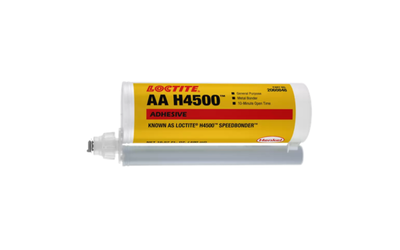
  • LOCTITE H4500

    LOCTITE H4500

    • 15-Minute Working Time
    • High Impact and Peel Strength
    • Primerless Structural Bonding
  • 3M™ Scotch-Weld™ Acrylic Adhesive DP8507NS

    3M™ Scotch-Weld™ Acrylic Adhesive DP8507NS

    • Toughened
    • 10:1 mix ratio
    • Excellent shear strength on bare metals, plastics and other materials
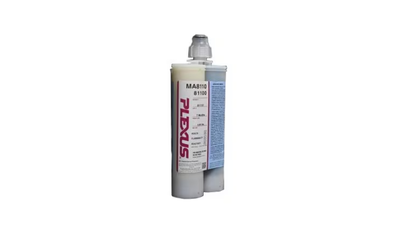
  • Plexus® MA8110 | Two-Part Methacrylate Adhesive

    Plexus® MA8110 | Two-Part Methacrylate Adhesive

    • 1:1 Controlled Mixing
    • 9 to 11-Minute Working Window
    • 24.8 MPa Cured Tensile Strength
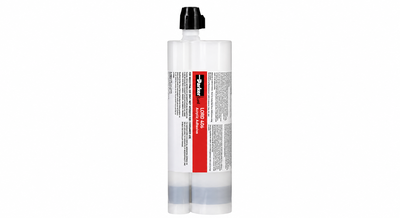
  • LORD 410/19 GB 4:1 375ML

    LORD 410/19 GB

    • Acrylic Metal/Engineered-Plastic Structural Adhesive
    • 20 to 30-Minute Working Window
    • 18.6 MPa Cured Tensile Strength
  • ORD® 810S/20GB Flexible Acrylic Adhesive System

    LORD® 810S/20GB Flexible Acrylic Adhesive System

    • 2:1 mix ratio acrylic adhesive system
    • 8-12 minute selectable working time
    • Non-sag structural bonding with environmental and solvent resistance.
  • 3M™ Scotch-Weld™ Structural Acrylic Adhesive DP8005

    3M™ Scotch-Weld™ Structural Acrylic Adhesive DP8005

    • Room Temperature Cure
    • Excellent Water and Humidity Resistance
    • Very Good Chemical Resistance
  • ABchimie 9111 UV Glue

    ABchimie 9111 UV Glue

    • One-component
    • Fast UV Curing
    • Adhesion to many substrates
  • ABchimie 9111 UV LED Glue

    ABchimie 9111 UV LED Glue

    • One-component
    • Fast LED UV Curing
    • Adhesion to many substrates
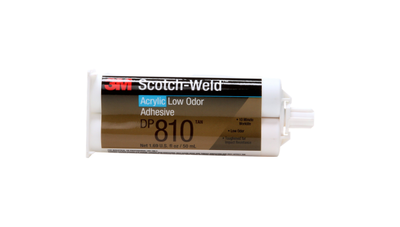
  • 3M™ Scotch-Weld™ Low Odor Acrylic Adhesive DP810

    3M™ Scotch-Weld™ Low Odor Acrylic Adhesive DP810

    • Tough, durable bonds
    • Minimal surface prep
    • Excellent shear and peel strength
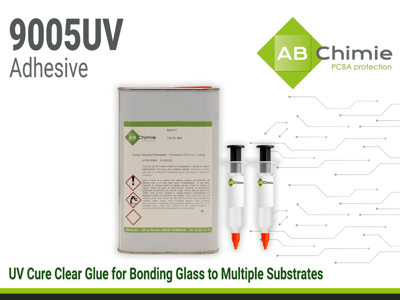
  • ABchimie 9005UV Glue

    ABchimie 9005UV Glue

    • One-component
    • Fast UV Curing
    • Glass to multiple substrate adhesion
  • ABchimie 9005UV LED Glue

    ABchimie 9005UV LED Glue

    • One-component
    • Fast UV LED Curing
    • Glass to multiple substrate adhesion
  • 3M™ Scotch-Weld™ Low Odor Acrylic Adhesive DP8810NS

    3M™ Scotch-Weld™ Low Odor Acrylic Adhesive DP8810NS

    • Toughened
    • Excellent shear strength
    • High peel and impact strength
  • Plexus® MA1130 | Two-Part Methacrylate Adhesive

    Plexus® MA1130 | Two-Part Methacrylate Adhesive

    • Two-part methacrylate for multi-material structural bonding
    • 26–33 minute work time at 75°F
    • Gap tolerance up to 0.5 inch
  • ARALDITE 2081-10

    ARALDITE 2081-10

    • Steel-to-CFRP Acrylic Bonding
    • 10-Minute Open Time
    • Non-Flammable Bonding Formulation
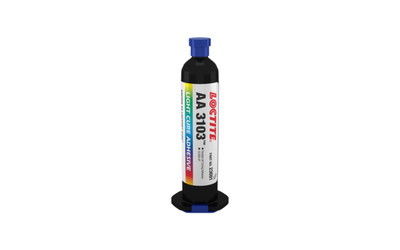
  • LOCTITE 3103

    LOCTITE AA 3103

    • UV/Visible-Light Adhesive Cure
    • High-Adhesion Adhesive Bonding
    • Polycarbonate Bonding Application
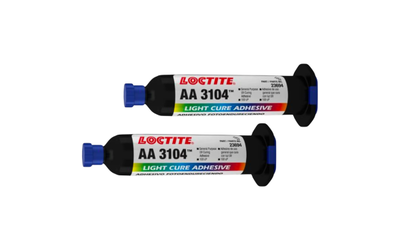
  • LOCTITE 3104

    LOCTITE 3104

    • UV/Visible-Light Adhesive Cure
    • Direct PVC-to-Polycarbonate Bonding
    • Low-Viscosity Adhesive Application
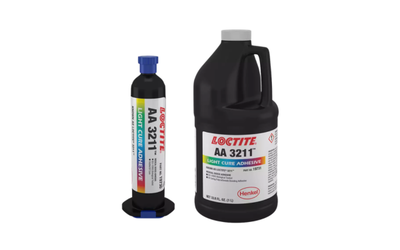
  • LOCTITE 3211

    LOCTITE 3211

    • UV/Visible-Light Cure Activation
    • Fast Adhesive Cure
    • Low-Viscosity Adhesive Application
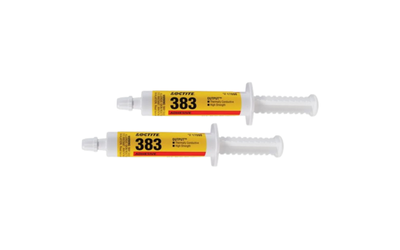
  • LOCTITE 383

    LOCTITE 383

    • High-Viscosity Placement Control
    • 0.602 W/(m K) Thermal Bonding
    • One-Component Thermal Bonding System
  • LOCTITE 384

    LOCTITE 384

    • 0.757 W/(m K) Thermal Conductivity
    • Room-Temperature Activator Cure
    • Controlled Medium-Strength Bonding
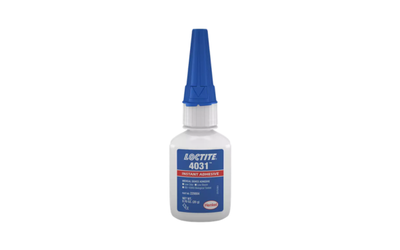
  • LOCTITE 4031

    LOCTITE 4031

    • Low-Odor Cyanoacrylate Adhesive
    • Low-Blooming Adhesive Cure
    • Medical-Device Bonding Applications
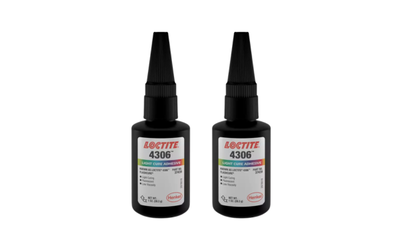
  • LOCTITE 4306

    LOCTITE 4306

    • Dual-Cure Bonding Processing
    • Low-Blooming Bonding Cure
    • Rapid Surface and Fixture Curing
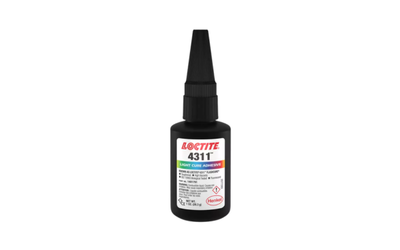
  • LOCTITE 4311

    LOCTITE 4311

    • ISO 10993-Based Biocompatible
    • Low-Blooming Bonding Cure
    • Dual-Cure Bonding Processing
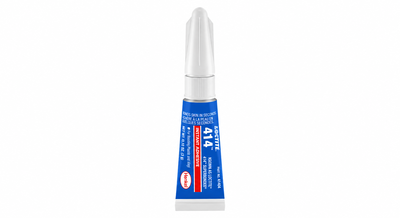
  • LOCTITE 414

    LOCTITE 414

    • Low-Viscosity General Bonding
    • Fast Rubber and Plastic Fixturing
    • Strong Thin-Gap Metal Bonds
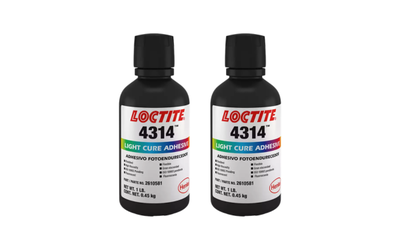
  • LOCTITE 4314

    LOCTITE 4314

    • One-Component Adhesive System
    • Dual-Cure Bonding Processing
    • Low-Blooming Bonding Cure
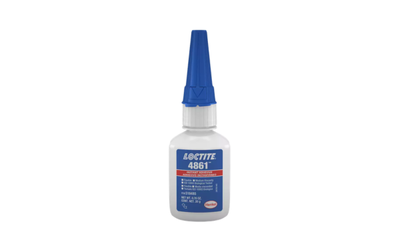
  • LOCTITE 4861

    LOCTITE 4861

    • Flexible Cured Adhesive
    • Rapid Humidity Cure
    • Medium-Viscosity Application Control
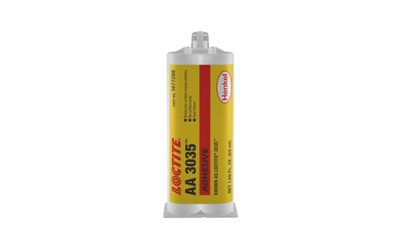
  • LOCTITE AA 3035

    LOCTITE AA 3035

    • Low Energy Plastic Bonding
    • Fast Room-Temperature Bonding Cure
    • Multi-Substrate Durability Acrylic Bonding
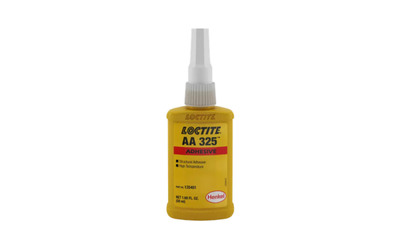
  • LOCTITE AA 325

    LOCTITE AA 325

    • One-Component Adhesive System
    • Rigid-Part Structural Bonding
    • Gap and Fluid Resistance
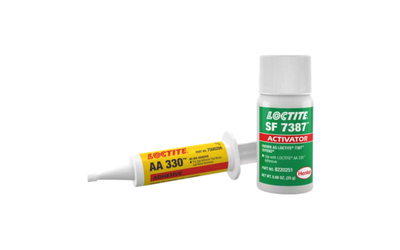
  • LOCTITE AA 330

    LOCTITE AA 330

    • Multi-Material Urethane Bonding
    • One-Component Application Urethane Bonding
    • High-Strength Structural Bonding
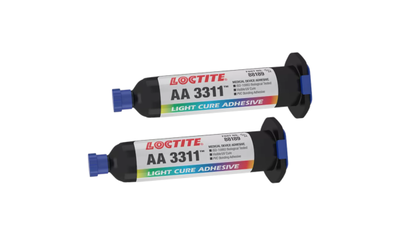
  • LOCTITE AA 3311

    LOCTITE AA 3311

    • High Speed Light Cure
    • Multi-Substrate Urethane Bonding
    • Medical Devices Urethane Bonding
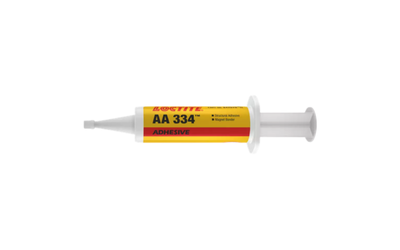
  • LOCTITE AA 334

    LOCTITE AA 334

    • Permanent Acrylic Bonding
    • Tough Structural Bonding
    • Flexible Cured Adhesive
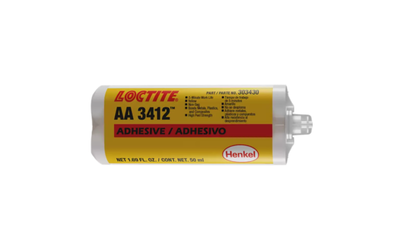
  • LOCTITE AA 3412

    LOCTITE AA 3412

    • High-Strength Structural Bonding
    • Non-Sag Placement Control
    • Fast Room Temperature Curing
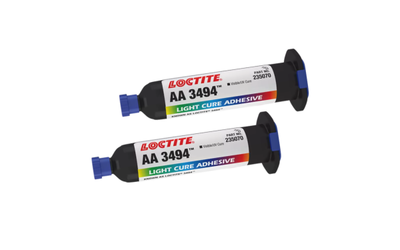
  • LOCTITE AA 3494

    LOCTITE AA 3494

    • UV/Visible-Light Adhesive Cure
    • 10-Second or Faster Fixture
    • Electrically Insulating Acrylic Adhesive
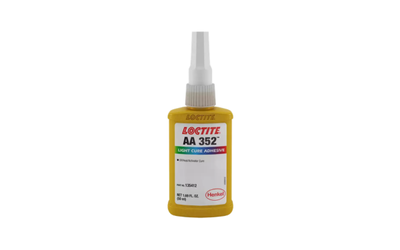
  • LOCTITE AA 352

    LOCTITE AA 352

    • One-Component Adhesive System
    • Rapid UV Bonding Cure
    • Impact-Resistant Acrylic Bonding
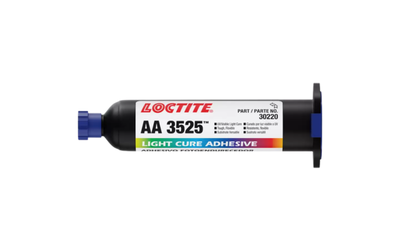
  • LOCTITE AA 3525

    LOCTITE AA 3525

    • Rapid Cure Speed
    • Clear, Colorless Bondline
    • Good Moisture and Humidity Resistance
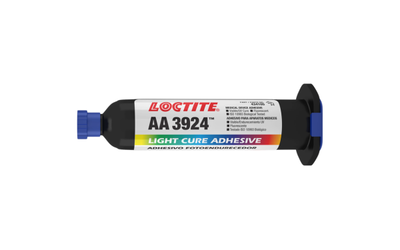
  • LOCTITE AA 3924

    LOCTITE AA 3924

    • Fast UV/Visible-Light Fixture
    • Sterilization-Resistant Cured Bondline
    • Medical-Device Assembly Bonding
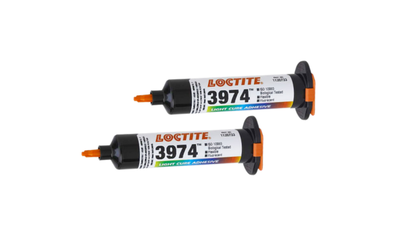
  • LOCTITE AA 3974

    LOCTITE AA 3974

    • Rapid UV/Visible-Light Fixture
    • Thermal-Cycling-Resistant Cured Adhesive
    • Potting/Sealing/Bonding Assembly Applications
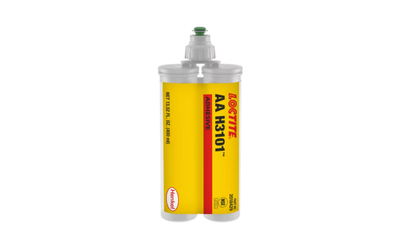
  • LOCTITE AA H3101

    LOCTITE AA H3101

    • 1:1 Controlled Mixing
    • 20 to 25-Minute Fixture Time
    • Up to 9.5 mm Gap Filling
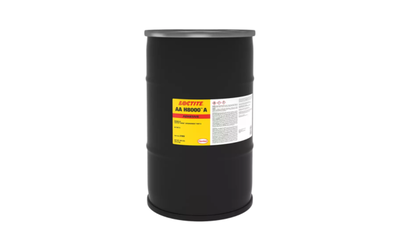
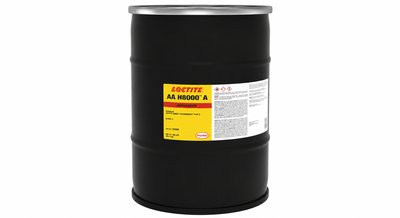
  • LOCTITE AA H8000

    LOCTITE AA H8000

    • Fast Assembly Fixturing
    • Impact-Resistant Methacrylate Bonding
    • Minimal Surface Preparation Needed
  • LORD 403

    LORD 403

    • LORD Accelerator 17/19/19GB Compatibility
    • Alternative to Welding/Brazing/Fastening
    • Acrylic Adhesive with Multiple Accelerators
  • LORD 403/19

    LORD 403/19

    • 2 to 4-Minute Working Window
    • Impact-Resistant Acrylic Bonding
    • Non-Sag Placement Control
  • LORD 506

    LORD 506

    • 4 to 6-Minute Working Window
    • Flexible Cured Adhesive
    • Environmental Resistance Acrylic Bonding
  • LORD 606/6

    LORD 606/6

    • Difficult Dcpd-Based FRP Bonding
    • 4 to 6-Minute Working Window
    • Glass-Bead Bondline Control
  • LORD 850S/25GB

    LORD 850S/25GB

    • Welding/Fastener Replacement Bonding
    • 6 to 10-Minute Working Time
    • Documented Chemical/Moisture/Salt-Spray/Weather Resistance
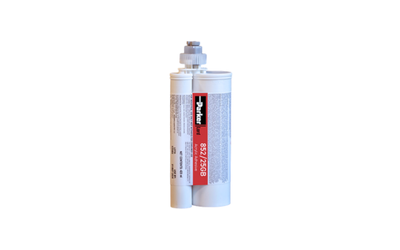
  • LORD 852/25GB

    LORD 852/25GB

    • Welding/Fastener Replacement Bonding
    • 20 to 25-Minute Working Time
    • Prepared/Unprepared Metal/FRP/Plastic Bonding
  • MP 55305

    MP 55305

    • No-Prep Impact-Resistant Bonding
    • 2 to 3-Minute Open Time
    • Thermal-Cycling and Chemical Resistance
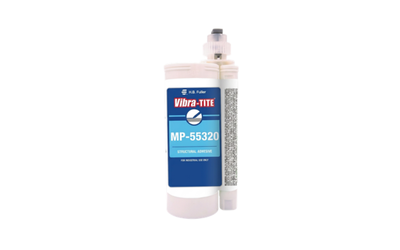
  • MP 55320

    MP 55320

    • No-Prep Multi-Substrate Bonding
    • 7 to 12-Minute Open Time
    • Thermal-Cycling/Chemical-Resistant Flexible Bonding
  • LOCTITE 3341

    LOCTITE 3341

    • Fast UV/Visible-Light Fixturing
    • Flexible Plastic Bonding
    • UV-Fluorescent Presence Inspection
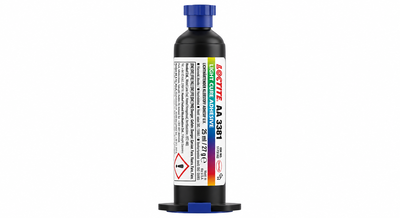
  • LOCTITE AA 3381

    LOCTITE AA 3381

    • Fast 365 nm Light Fixturing
    • High-Elongation Glass Joint Sealing
    • Dissimilar Rigid-Substrate Bonding
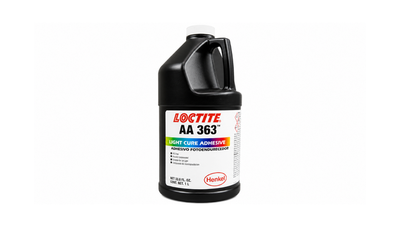
  • LOCTITE 363

    LOCTITE 363

    • Low-Viscosity Shallow Potting
    • Rapid 365 nm UV Cure
    • Dielectric Electronic Encapsulation
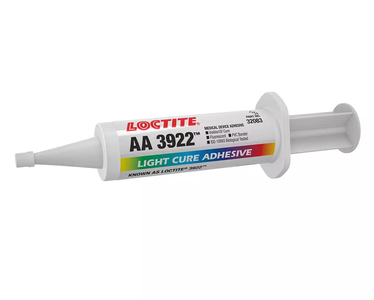
  • LOCTITE 3922

    LOCTITE 3922

    • Low-Viscosity Cannula Bonding
    • Fast UV/Visible-Light Fixturing
    • Sterilization-Tested Needle Assemblies
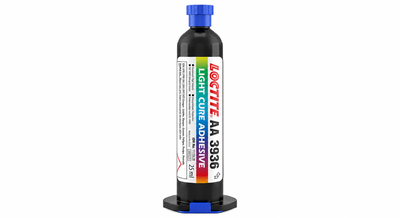
  • LOCTITE 3936

    LOCTITE 3936

    • Medium-Viscosity Gap Control
    • Sub-Five-Second Light Fixturing
    • Flexible Cannula Bonding
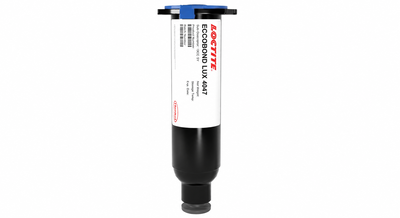
  • LOCTITE 4047

    LOCTITE 4047

    • Rapid Blue-or-UV Photocure
    • High-Viscosity Placement Control
    • Low-Shrink Mechanical Stability
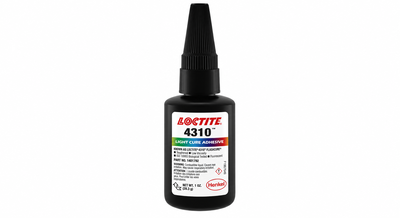
  • LOCTITE 4310

    LOCTITE 4310

    • Low-Viscosity Dual Cure
    • Rapid Exposed-Surface Fixturing
    • Fluorescent Process Inspection
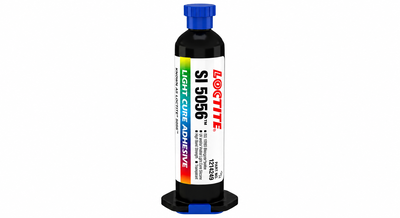
  • LOCTITE 5056

    LOCTITE 5056

    • Rapid UV Silicone Cure
    • Low-Viscosity Potting and Coating
    • Transparent Elastomeric Final State
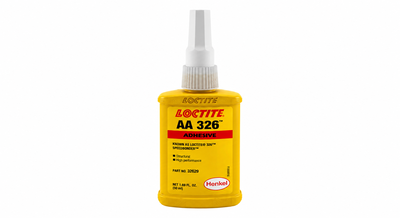
  • LOCTITE AA 326

    LOCTITE AA 326

    • One-Component Activator Cure
    • Controlled High-Viscosity Placement
    • Ferrite-to-Metal Structural Bonding
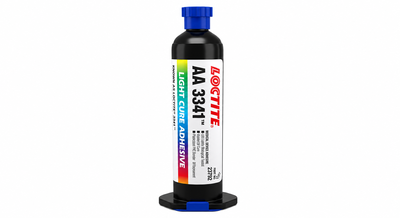
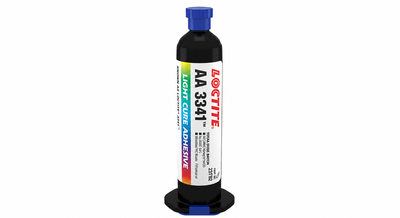
  • LOCTITE AA 3341

    LOCTITE AA 3341

    • Low-Viscosity Thermoplastic Bonding
    • Fast UV/Visible-Light Cure
    • Flexible 220% Elongation
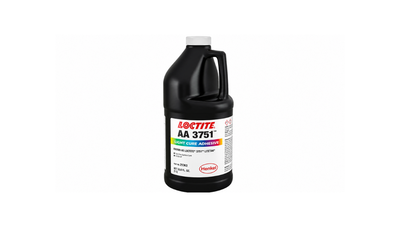
  • LOCTITE AA 3751

    LOCTITE AA 3751

    • Solvent-Free 100% Solids
    • 10-Second UV Fixture
    • Multi-Function UV Processing
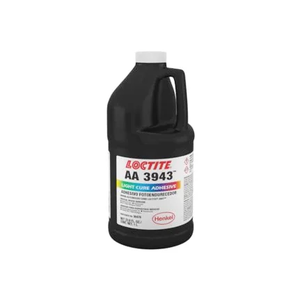
  • LOCTITE AA 3943

    LOCTITE AA 3943

    • Cannula-Focused Medium-Viscosity Dispensing
    • Sub-5-Second UV Fixture
    • UV-Fluorescent Assembly Inspection
  • LOCTITE H8000

    LOCTITE H8000

    • Visible 10:1 Mix Confirmation
    • 30-Minute Assembly Window
    • Resilient Peel and Impact Performance
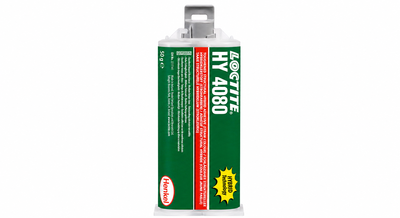
  • LOCTITE HY4080

    LOCTITE HY4080

    • Equal-Volume Hybrid Mixing
    • 10-Minute Fixture on Metals
    • Tough Peel and Impact Performance
  • LORD 406E

    LORD 406E

    • High-Impact and Peel Performance
    • 6-10 Minute Working Time
    • Minimal Metal Surface Preparation
  • LORD 410/19GB

    LORD 410/19GB

    • Glass-Bead Bondline Control
    • 20-30 Minute Working Time
    • Non-Sag Vertical Application
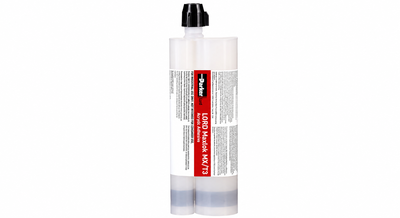
  • LORD MAXLOK MX/T3S

    LORD MAXLOK MX/T3S

    • Minimal-Preparation Metal Bonding
    • Fast 6- to 8-Minute Handling
    • Controlled Non-Sag Bondline
  • PERMABOND TA459

    PERMABOND TA459

    • 20-40 Second Steel Fixture
    • 20-25 N/mm2 Steel Shear
    • Non-Corrosive Copper Bonding
  • PERMABOND TA4590

    PERMABOND TA4590

    • 15-30 Second Steel Fixture
    • 2-3 Minute Working Strength
    • Non-Corrosive Copper Bonding
  • PERMABOND TA4592

    PERMABOND TA4592

    • External-Mix Automated Dispensing
    • Sub-30-Second Gel Time
    • Motor Magnet and Ferrite Bonding
  • PERMABOND TA4605

    PERMABOND TA4605

    • Primer-Free Polyolefin Bonding
    • Controlled 1 mm Gap Filling
    • Fast Handling-Strength Development
  • PERMABOND TA4610

    PERMABOND TA4610

    • Underwater Structural Bonding
    • Primer-Free Polyolefin Assembly
    • Microparticle-Controlled 1 mm Gaps
  • PERMABOND TA4611

    PERMABOND TA4611

    • Microbead-Free Small-Gap Bonding
    • Primer-Free PP and PE Assembly
    • Controlled 0.5 mm Gap Filling
  • PERMABOND TA4811

    PERMABOND TA4811

    • 1:1 toughened methacrylate chemistry
    • Fast room-temperature cure
    • Durable structural performance
  • PERMABOND UV610

    PERMABOND UV610

    • Fast Low-Power UV Cure
    • High-Strength Glass-Metal Bonding
    • Solvent-Free Cure-On-Demand Processing
  • PERMABOND UV620

    PERMABOND UV620

    • Optically Clear Glass Bonding
    • Yellowing-Resistant Cured Appearance
    • Rapid Low-Power Lamp Cure
  • PERMABOND UV625

    PERMABOND UV625

    • Non-Drip Vertical Bonding
    • Larger-Gap UV Application
    • Flexible Impact-Resistant Cure
  • PERMABOND UV6260

    PERMABOND UV6260

    • Filtered-Light UV Curing
    • Tack-Free Surface Cure
    • High-Elongation Plastic Bonding
  • PERMABOND UV630

    PERMABOND UV630

    • Low-Viscosity Plastic Bonding
    • Fast 365 to 420 nm Cure
    • High-Elongation Cured Bond
  • PERMABOND UV640

    PERMABOND UV640

    • Fast Low-Power UV Cure
    • High-Elongation Plastic Bonding
    • Clear Polycarbonate Assembly
  • PERMABOND UV643

    PERMABOND UV643

    • Sub-Second High-Intensity Fixture
    • Thixotropic Rigid-Plastic Bonding
    • Hot-Wet Strength Retention
  • PERMABOND UV645

    PERMABOND UV645

    • High-Viscosity Controlled Application
    • Fast 2 to 10 Second Fixture
    • Flexible Plastic-Bonding Cure
  • PERMABOND UV648

    PERMABOND UV648

    • Non-Drip Application Control
    • UV-Stabilized Plastic Bonding
    • Colorless High-Elongation Cure
  • PERMABOND UV681

    PERMABOND UV681

    • Low-Viscosity Coating Application
    • Tack-Free UV-Cured Surface
    • Balanced Cured Strength and Hardness
  • PERMABOND UV683

    PERMABOND UV683

    • Controlled Doming and Encapsulation
    • Rapid Tack-Free UV Cure
    • High-Transmittance Cured Coating
  • PERMABOND UV7141

    PERMABOND UV7141

    • Shadow-Area Anaerobic Cure
    • Second-Scale UV Fixture
    • High-Transmittance Glass Bonding
  • SIKAFAST 3121

    SIKAFAST 3121

    • Fast Five-Minute Open Time
    • High-Ductility Structural Bonding
    • Concealed-Joint Fastener Replacement
  • SIKAFAST 3131S

    SIKAFAST 3131S

    • Seven-Minute Open Time
    • Built-In Bondline Spacing
    • High-Strength Concealed-Joint Bonding
  • SIKAFAST 321S

    SIKAFAST 321S

    • Fast Five-Minute Open Time
    • Built-In Bondline Spacing
    • Stanchion and Assembly Bonding
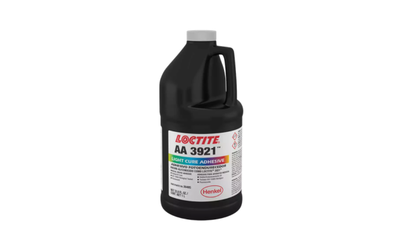
  • LOCTITE AA 3921

    LOCTITE AA 3921

    • 5-Second UV/Visible-Light Cure
    • Transparent Cured Bondline
    • High-Hardness Acrylic Adhesive

Frequently asked questions

Frequently Asked Questions about Structural Acrylic Adhesives

How do structural acrylics compare to epoxy adhesives?

Structural acrylics and epoxies both deliver high-strength structural bonds, but they differ in cure speed, surface preparation, and toughness. Acrylics typically reach handling strength in minutes rather than the hours epoxies often require, and many acrylic formulations tolerate light contamination, such as residual oils on metal, without extensive degreasing or priming. Acrylics also tend to offer greater peel and impact resistance thanks to their inherent visco-elasticity, while epoxies generally provide higher chemical and temperature resistance. The right choice depends on the substrate, required cure speed, and the loading conditions the joint will see in service.

How do I choose between 2K mixed, no-mix, and light-cure acrylics?

The right system depends on your bond line and process. Two-component mixed acrylics offer the best gap-filling capability and suit larger or uneven bond lines dispensed through a static mixing nozzle. Surface-activated, no-mix systems are built for zero-gap, tight-fitting joints and eliminate the need for mixing hardware, but they depend on diffusion across the bond line, so cure depth is limited by bond thickness. One-component light-cure acrylics cure in seconds under UV or visible light and are best suited to small, light-transmissive joints such as optical glass, wire tacking, or medical device assembly.

Can structural acrylics bond low surface energy plastics without a primer?

Many structural acrylic formulations are designed to bond low surface energy (LSE) plastics, such as polypropylene, polyethylene, and PTFE, without plasma treatment, corona discharge, or chemical primers. This is possible because the adhesive chemically dissolves the top molecular layer of the plastic, forming an interpenetrating polymer network that fuses the substrates at the surface. Not all acrylic formulations offer this capability to the same degree, so product-specific technical data should be checked when primerless LSE bonding is required.

Do structural acrylics require extensive surface preparation?

Structural acrylics generally require less surface preparation than epoxies, but the degree of tolerance depends on the formulation and substrate. Many standard MMA-based acrylics are formulated to bond directly to bare metal despite residual stamping fluids, drawing compounds, or light oxidation, reducing the degreasing and grit-blasting steps that other adhesive chemistries require. Heavily contaminated, painted, or coated surfaces may still benefit from cleaning to achieve optimal bond strength, and any application-specific surface requirements should be confirmed against the applicable product data.

What is the difference between working time and fixture time?

Working time, sometimes called open time, is the period after dispensing during which the adhesive can still be applied, positioned, or adjusted before it begins to set. Fixture time is the point at which the bond has developed enough handling strength to hold the assembly without additional clamping, though the adhesive continues to build strength afterward as it fully cures. Structural acrylics are often selected specifically because they offer short fixture times, allowing assemblies to move to the next production step without extended clamping or oven cure.

Where are structural acrylic adhesives commonly used?

Structural acrylics are widely used in transportation, including marine, RV, and rail applications, for bonding fiberglass reinforced plastics, gel coats, and ABS components that must flex under dynamic loads. They are also used to replace spot welds in metal enclosures and HVAC assemblies, secure rare-earth magnets in electric motors and generators, and bond components in renewable energy systems such as wind turbine nacelles and solar panel frames, where long-term UV and thermal cycling resistance matters.


Learn more

High-Performance Structural Acrylic Adhesives

Structural acrylic adhesives, often based on methyl methacrylate (MMA) chemistry, are the go-to solution when you need extreme strength without the slow cure times and meticulous surface preparation that epoxies demand. Available as two-component mixed systems, surface-activated no-mix systems, and one-component light-cure formulations, these rapid-curing adhesives are engineered to deliver exceptional shear, peel, and impact resistance across a wide range of assembly processes.

They excel at chemically fusing difficult-to-bond substrates, including low surface energy (LSE) plastics, composites, and bare metals that still retain residual cutting oils. By replacing mechanical fasteners and welding, structural acrylics streamline manufacturing, reduce assembly weight, and eliminate the localized stress concentrations that rivets and spot welds create.

Structural acrylic adhesive bonding


Structural Acrylic Selector Guide

Each delivery and initiation system trades off cure speed, gap tolerance, and process complexity differently. Use this guide to match the system to your assembly line.


2K Mixed Acrylic
Gap Fill
★★★★★
Cure Speed
★★★☆☆
Surface Tolerance
★★★★☆
Equipment Need
Mixing nozzle
Fixture Time
3–5 min
Best for general structural bonding, large or uneven bond lines, high-volume dispensing
Surface-Activated (No-Mix)
Gap Fill
★★☆☆☆
Cure Speed
★★★★☆
Surface Tolerance
★★★☆☆
Equipment Need
No mixing hardware
Fixture Time
Seconds–min
Best for zero-gap, tight-fitting joints; simplified two-sided application workflows
1K Light-Cure
Gap Fill
★☆☆☆☆
Cure Speed
★★★★★
Surface Tolerance
★★☆☆☆
Equipment Need
UV/visible light source
Fixture Time
Seconds
Best for optical glass bonding, wire tacking, medical device assembly


Types of Acrylic Adhesives

The acrylic family also includes anaerobics and cyanoacrylates for specialized dispensing and joint designs. True structural acrylics, however, are classified by how they're delivered and initiated, and each system trades off cure speed, gap tolerance, and equipment complexity differently.


2K Mixed Acrylics

How it works: Resin and initiator dispensed through a static mixing nozzle (1:1 or 10:1).

Strength: Maximum gap-filling; the industrial standard for structural bonding.

Surface-Activated (No-Mix)

How it works: Resin on one substrate, initiator on the other. Cure begins on contact via diffusion, no mixing nozzle involved.

Strength: Built for zero-gap, tight-fitting joints.

1K Light-Cure

How it works: Photoinitiators stay dormant until exposed to UV or visible light.

Strength: Cures in seconds; common in optical glass, wire tacking, and medical assembly.


Inside a No-Mix Bond: How Diffusion Cure Works

No-mix systems split the reactive chemistry into two physical states so it can't polymerize prematurely: a thick, thixotropic resin paste on one side (methacrylate monomers, elastomeric tougheners, an oxidizer) and a water-thin activator on the other (a reducing agent, often solvent-flashed down to a dry catalytic film). The cure only starts once the two meet.

Application

Viscous resin goes onto Substrate 1. The liquid initiator is brushed, sprayed, or wiped onto Substrate 2.

Mating & Diffusion

Pressed together, the resin wets against the dry initiator layer. Catalytic ions diffuse into the resin matrix.

Initiation

The catalyst reacts with the suspended peroxide, generating free radicals that trigger chain-reaction polymerization.


Design Constraint: The "Wet Center"

Cure depth is governed by Fick's laws of diffusion. The catalyst has to physically migrate through the resin to reach unreacted monomer, so kinetics depend heavily on bond thickness and ambient temperature. Exceed the initiator's diffusion range and the center of the bond line stays liquid, a wet center that leads to catastrophic cohesive failure under load.


Key Performance Benefits

Primerless LSE Bonding

Standard adhesives can't wet low surface energy plastics like PP, PE, or PTFE. Structural acrylics dissolve the top molecular layer instead, fusing substrates without plasma treatment or primers.

Tolerance to Contaminated Surfaces

Formulated to cut through residual stamping fluids, drawing compounds, and light oxidation, bonding directly to bare metal and eliminating degreasing bottlenecks.

High Peel Strength & Toughness

Elastomeric toughening (like dispersed nitrile rubber) gives the bond line visco-elasticity to absorb shock, thermal cycling, and vibration instead of shattering under cleavage.

Rapid Kinetic Cure

Tunable cure profiles let a fast MMA reach handling strength in 3 to 5 minutes at room temperature, no ovens or extended clamping needed.


Core Industrial Applications

Transportation

FRP, gel coats, and ABS for marine hulls, RVs, and rail cars. Flexes with wave and road impact instead of popping rivets.

Metal Enclosures & HVAC

Replaces spot welds on galvanized steel and aluminum, sealing seams without the warping caused by welding heat.

Motors & Generators

Secures brittle rare-earth magnets to steel rotors. Fast fixture speeds production; impact resistance survives torque reversals.

Renewable Energy

Bonds wind turbine nacelles and aluminum solar frames, standing up to decades of UV exposure, thermal cycling, and wind shear.

Leading Brands Trust in Our Products and Services

  • Jabil
  • Linxens
  • Magna
  • Medtronic
  • NXP
  • Philips
  • Semikron
  • Teledyne
  • Thales
  • Vishay
  • ZF
  • AMS
  • Apple
  • Audi
  • Broadcom
  • Borgwarner
  • Bosch
  • Eaton
  • Henkel
  • Honeywell
  • Hysol
  • Intel
Products that Perform|Knowledge that Serves|Service that Delivers